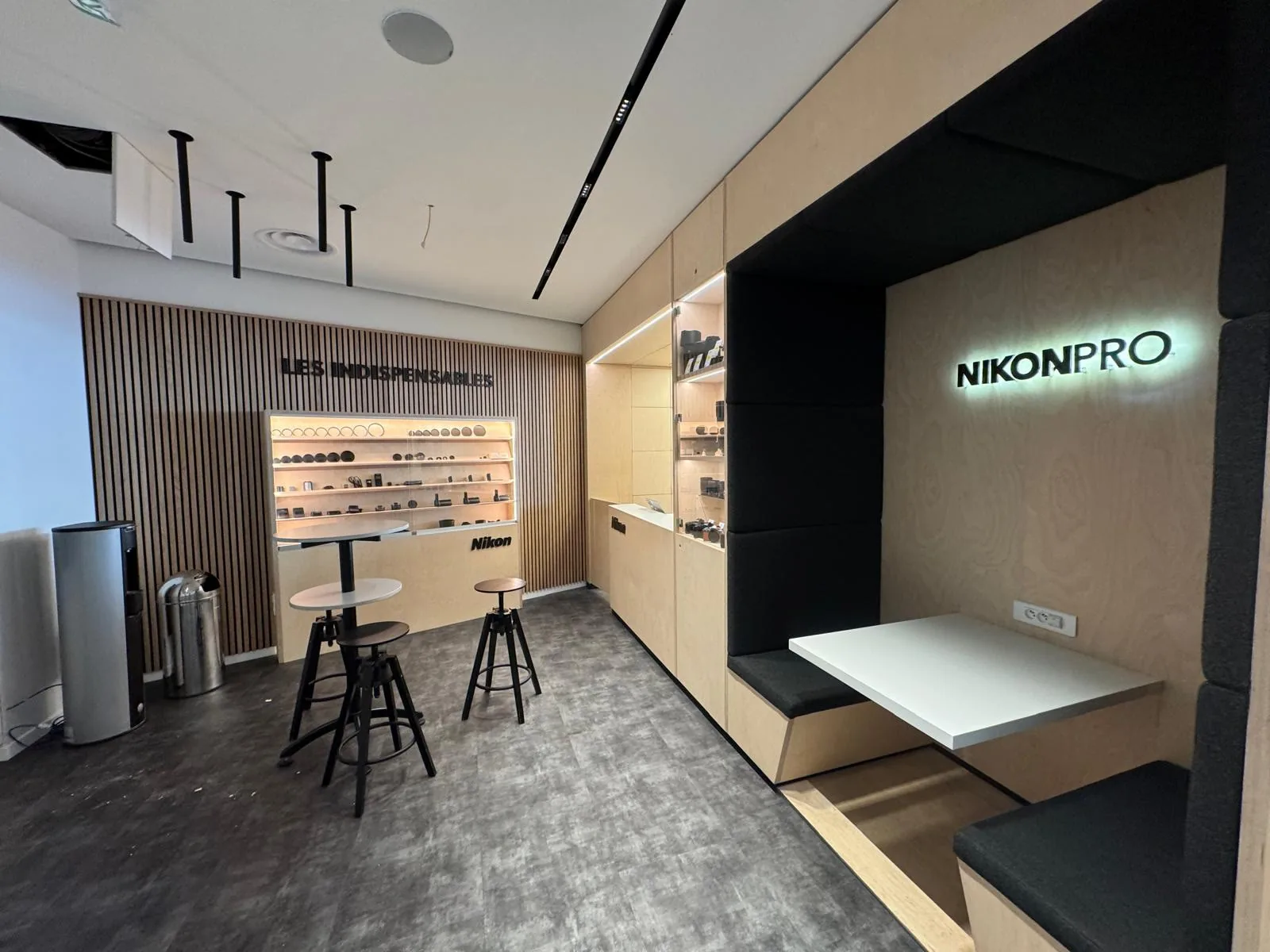
Does it design and build in-house?
A contractor that draws, builds in its own workshop and installs keeps control from the first line to handover. A middleman that subcontracts everything multiplies the people involved and the information lost between the drawing and the site.
Ask directly: where is the workshop, what do you build in-house, what do you hand to others? The answer says a lot about control of the timeline and the quality.
Is it insured for what it builds?
Ten-year liability (garantie décennale) holds the builder responsible for ten years from the handover of works, for damage that compromises the soundness of the structure or makes it unfit for its purpose. A fixed fit-out installed in a shop falls within this.
Ask for the ten-year insurance certificate and check it covers the activity in question. A serious firm provides it without hesitation.
Is the quote itemised?
A clear quote prices the project line by line: design, fabrication, materials, install. It lets you compare, make trade-offs and avoid surprises during the works. A lump sum with no detail hides as much as it shows.
Be wary of the oddly low quote: it often catches up in variations, cut-price materials or rushed finishes.
Does it have a verifiable existence?
A company registration (Kbis extract), a SIREN number, a real workshop address and work you can see: these are simple, checkable markers. They confirm the firm exists, does this trade and has delivered projects.
Cross-check the name on the official registers and look at delivered projects. Bespoke work is judged on evidence, not promises.
Does it understand your trade?
A shop, a bar, a practice do not share the same constraints. A contractor that knows your sector anticipates the rules (ERP, accessibility, hygiene) and the day-to-day use, instead of discovering them on site.
The good sign: on the first visit it talks flows, standards and use, not only looks. That crossing is what makes a place that lasts.